Why Earring Packaging Deserves Special Attention
Earrings are the most-purchased fine jewelry category — yet they are also the most packaging-diverse. A pair of diamond studs, a set of oversized hoops, and a chandelier earring each demand entirely different packaging solutions in terms of size, protection, and presentation.
The right earring packaging protects delicate components, elevates perceived value at the point of unboxing, and reinforces brand identity from shelf to customer. Getting it wrong — an oversized box for tiny studs, a shallow box that crushes hoops — undermines the experience no matter how beautiful the jewelry.
This guide covers packaging formats, earring-style-specific recommendations, materials, branding options, and a decision framework to help you choose. For a broader overview of packaging materials and styles, see our guide to choosing premium jewelry packaging.
Types of Earring Packaging
Earring Boxes (Rigid and Folding)
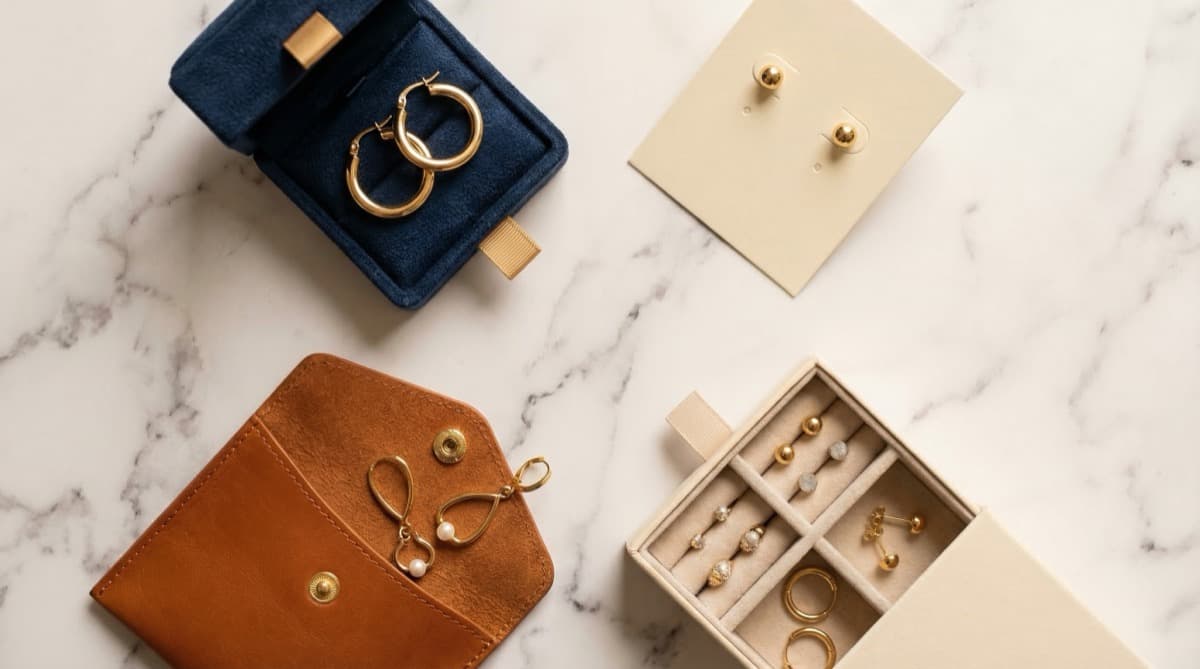
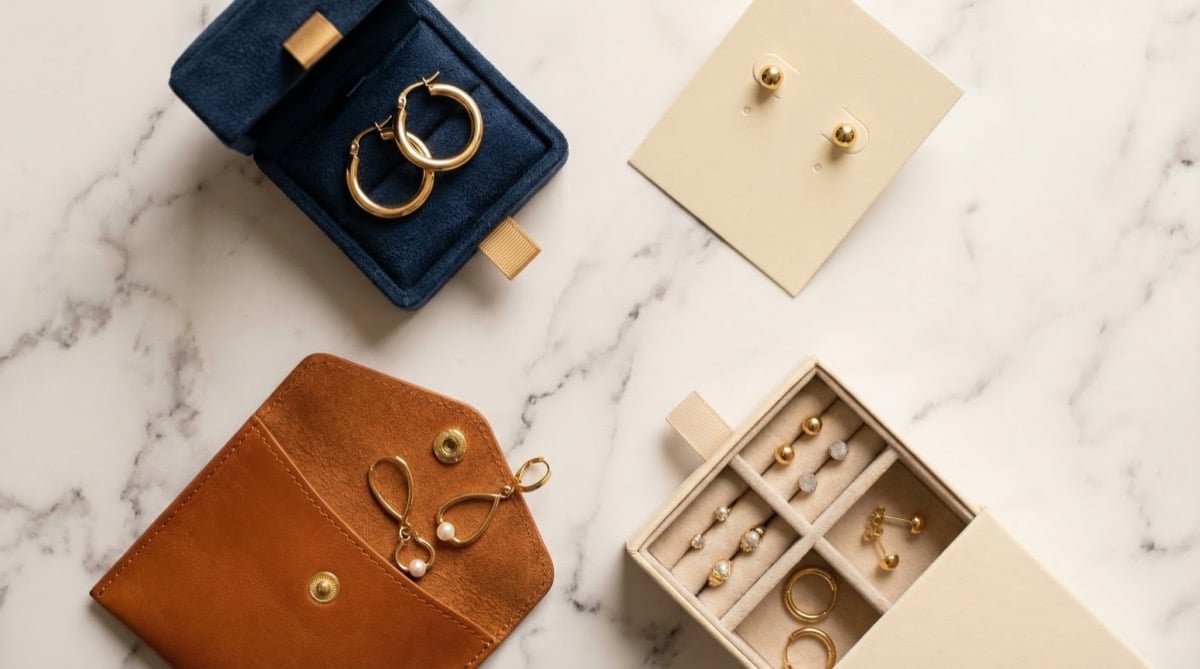
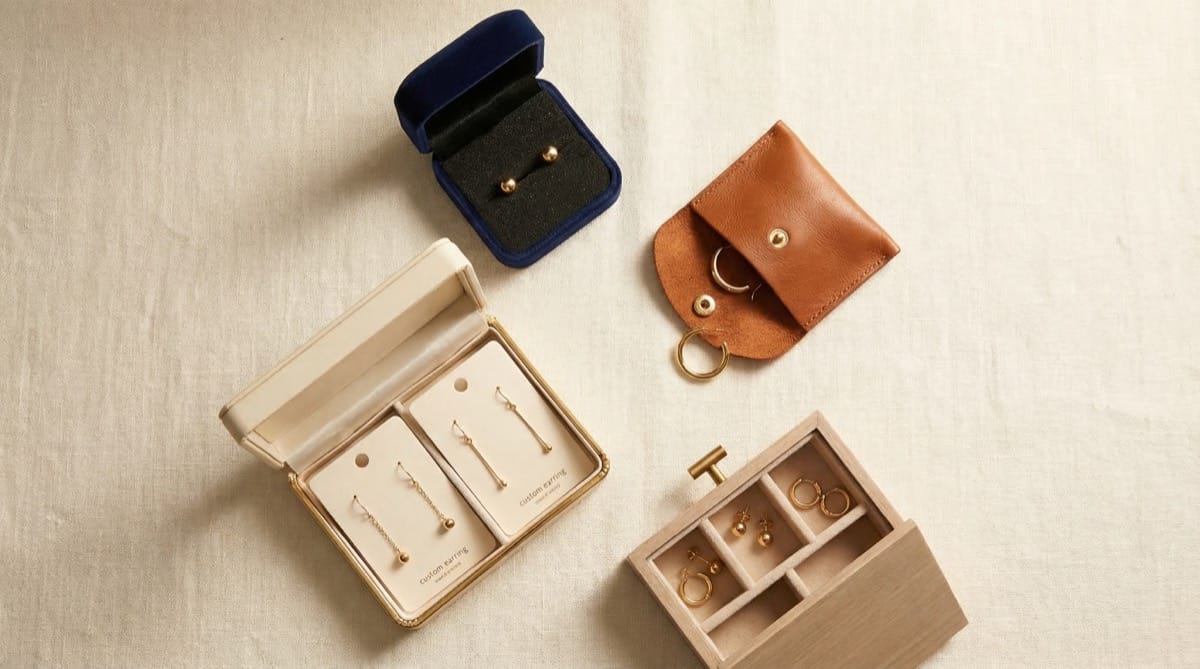
Rigid boxes with magnetic closures, hinged lids, clamshell openings, or drawer-style construction are the gold standard for earring presentation. They provide maximum protection, a premium unboxing experience, and strong retail shelf presence.
Size guidance: 2.5-inch square boxes work for most stud and small hoop earrings. Larger hoops and chandeliers need 3.5 to 4-inch boxes with deeper wells. Always size the box to the earring — not the other way around.
Earring Cards and Display Cards
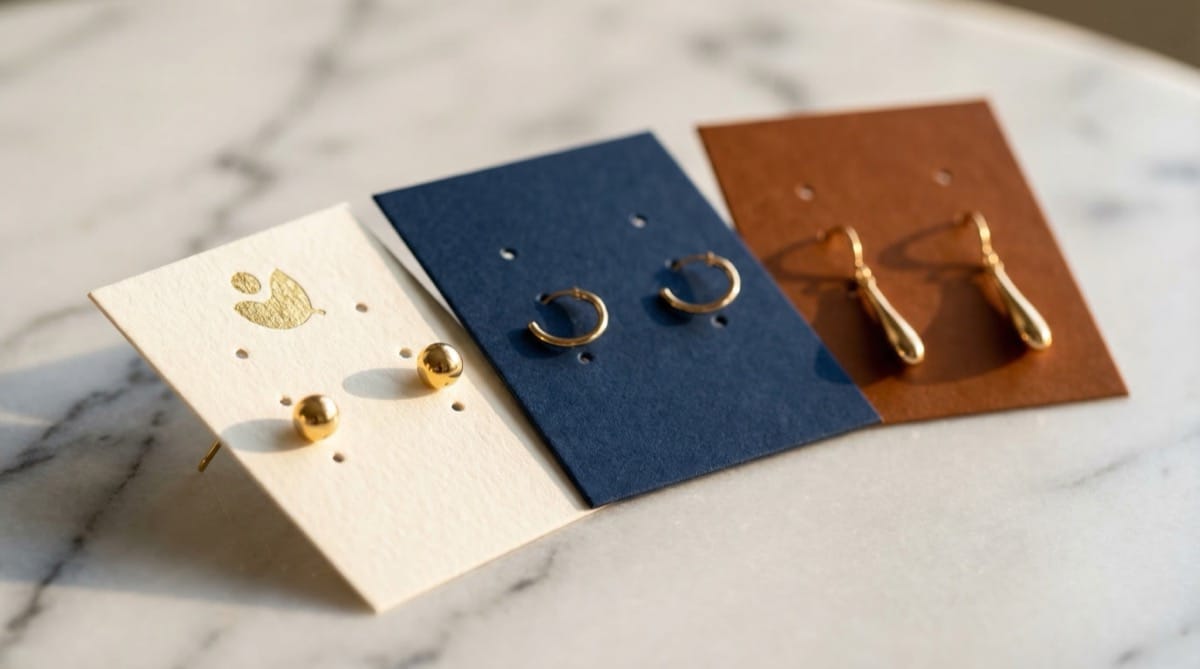
Die-cut cards with punched holes or slits hold earrings securely while doubling as a retail display. Card materials include coated art paper, kraft, and rigid cardstock. The card surface is also a branding opportunity — your logo, color, and a foil stamp applied directly on the card.
Earring cards are particularly effective for fashion jewelry, wholesale distribution, and pop-up retail where you need a cost-effective, high-volume solution that still looks intentional.
Earring Pouches
Drawstring, snap-closure, and envelope-style pouches in velvet, suede, microfiber, or genuine leather work well as secondary packaging (inside a box), travel packaging, and casual gifting. They add a layer of protection and experience without the cost of a rigid box.
For lightweight earring styles — small hoops, huggies, and simple drops — a beautifully branded pouch can stand alone as the primary packaging, especially for e-commerce brands prioritizing shipping efficiency.
Display Stands and T-Bars
T-bar inserts, busts, and angled pedestals placed inside boxes create an immediate visual impact when the lid opens. The earrings are visible and wearable-looking from the moment of reveal — particularly valuable for in-store presentation, trunk shows, and luxury gifting.
Matching Packaging to Earring Styles
This is where earring packaging gets specific. Each earring type has distinct requirements for size, insert design, and protection.
Stud Earrings
Studs need compact packaging — a 2.5-inch square box or smaller. The critical element is the insert: precision-punched holes or soft-grip slits hold the posts securely and prevent movement during shipping.
A foam base with velvet overlay keeps stones from rattling against surfaces. For fashion studs at volume, branded earring cards with backing holes are a cost-effective alternative that still presents beautifully.
Hoop and Huggie Earrings
Hoops require deeper boxes — a minimum of 1.5-inch depth — to prevent the lid from contacting the earring. The insert should feature H-cut foam or custom die-cut cavities that cradle the circular shape without compressing it.
Larger hoops may need box footprints of 3.5 to 4 inches. Avoid using earring cards for hoops — the weight and shape risk bending the card and damaging the earring during handling.
Drop and Dangle Earrings
Drop earrings benefit from taller boxes or T-bar inserts that let the earring hang freely, showing its full length. This creates an immediate "wearable" impression when the box opens.
Velvet-lined interiors protect gemstones and delicate chain links from tangling. For shipping, tissue wrap combined with a snug insert eliminates movement — the earring should not shift at all inside the box.
Chandelier and Statement Earrings
These are the most demanding earring type to package. They require the largest format — 4-inch-plus boxes with deep wells and custom die-cut foam inserts molded to the exact silhouette of the earring.
Interior padding is critical because chandelier earrings have multiple contact points — bezel-set stones, articulated links, and fine chain. Each component needs support. For retail display, consider window boxes or clear lids that showcase the earring without requiring the customer to open the package.
Materials and Interior Finishes
Exterior materials set the first impression. Options include genuine leather for luxury positioning, leatherette for a leather-like appearance at lower cost, velvet-wrapped board for tactile richness, premium paperboard with soft-touch lamination, and sustainable options like FSC-certified paper and recycled board.
Interior linings protect and present. Velvet is the classic choice — soft, rich, and effective at preventing scratches. Suede offers a more contemporary matte finish. Satin adds a luminous backdrop for gemstone earrings. Microfiber is a practical, cost-effective alternative that still looks premium.
Insert types determine how securely the earrings are held. EVA foam with flocking (velvet or suede finish) is the most versatile. Die-cut cardboard inserts work well for simpler earring shapes. Molded pulp is an emerging eco-friendly option for brands prioritizing sustainability.
Anti-tarnish features matter for fine jewelry: acid-free tissue, anti-tarnish tabs, and silica gel pockets protect silver and plated earrings during storage and transit.
Branding Your Earring Packaging
Exterior branding creates recognition: an embossed or debossed logo on the lid, hot foil stamping in gold or silver, or screen printing for full-color designs.
Interior branding surprises and delights: a printed logo on the lining, a branded ribbon pull for easy earring removal, or a custom-color insert that reinforces your palette.
Earring card branding is an underused opportunity for professional jewelry brands. A foil-stamped logo, custom shape die-cut, and branded backing card inside a box create a cohesive presentation that feels deliberate. See our guide to custom logo techniques for a comparison of branding methods.
Consistency across product lines is essential. If you also sell necklaces, rings, and bracelets, your earring packaging should share the same materials, colors, and branding approach as the rest of your packaging suite. A cohesive family of packaging reinforces brand identity at every touchpoint.
How to Choose the Right Earring Packaging
Five factors should guide your decision:
-
Earring style — dictates box size, insert type, and depth requirements. Studs and hoops need different solutions.
-
Price point — a $500 pair of diamond earrings deserves a genuine leather box with velvet lining. A $40 pair of fashion hoops pairs well with a branded card or pouch.
-
Sales channel — retail demands display-ready packaging that works on a shelf. E-commerce demands shipping protection and an unboxing moment at home. Wholesale requires bulk-friendly, space-efficient packaging.
-
Brand positioning — luxury brands need leather and velvet. Sustainable brands need recycled and FSC materials. Your packaging should reinforce your brand story.
-
Volume and budget — MOQ considerations affect which customization level is viable. At 300 units, fully custom is achievable. At lower volumes, semi-custom or stock with logo may be the practical starting point.
For the full ordering process — timelines, sampling, and what to expect — see our complete ordering guide.
Frequently Asked Questions
What is the best packaging for stud earrings?
A compact rigid box (2.5-inch square or smaller) with a velvet insert featuring precision-punched holes to hold the posts securely. For fashion studs at volume, branded earring cards with backing holes are a cost-effective alternative.
How do you package hoop earrings for shipping?
Use a deeper box with a minimum 1.5-inch depth and a custom die-cut foam insert that cradles the hoop shape. Wrap in acid-free tissue and place in a snug mailer to prevent any movement during transit.
What is the minimum order for custom earring boxes?
MOQs vary by material and customization level. Standard MOQs for fully custom designs start at 300 units per design — lower than many luxury packaging manufacturers and achievable for most jewelry brands.
Can I get matching packaging for earrings, rings, and necklaces?
Yes. Custom packaging suppliers offer coordinated suites where boxes, pouches, and bags share the same material, color, and branding across all jewelry types. This creates a cohesive brand experience.
Earring packaging is not one-size-fits-all. The right solution depends on your earring styles, your brand positioning, and where you sell. The brands that get this right create a presentation that feels as considered as the jewelry itself.
Share your vision with us and we will create a sample that brings it to life, or book a consultation to discuss your earring packaging needs.