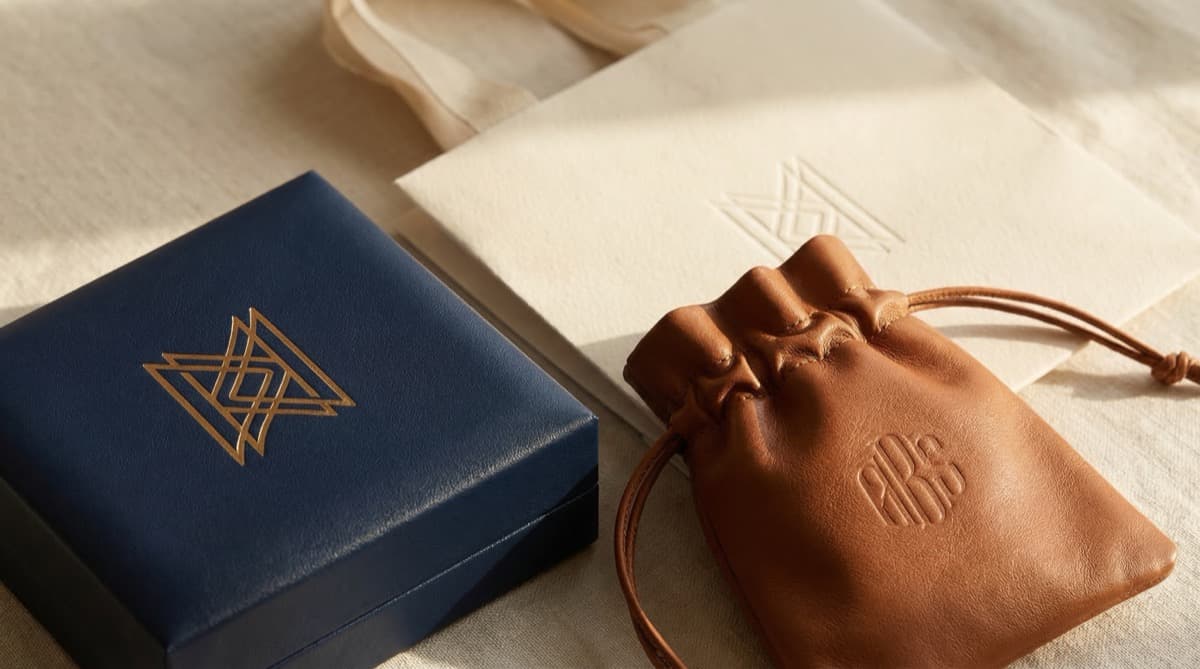
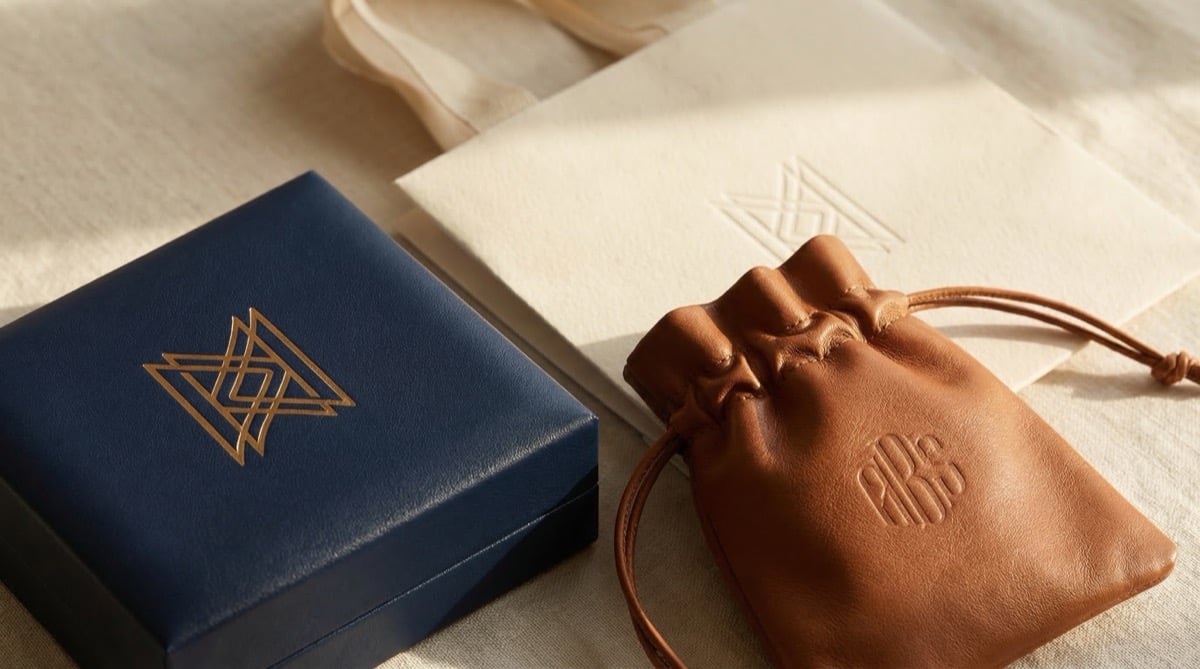
Your Logo Is Your Brand's Signature
On jewelry packaging, your logo does more than identify — it reassures. It tells your customer that the piece inside meets the same standard of quality as the box it comes in.
The technique you choose for applying your logo affects how it looks, how it feels, and ultimately, how your brand is perceived. Here's everything you need to know. (For a full overview of all available techniques, see our custom logo options service page.)
The Six Main Techniques
1. Blind Embossing
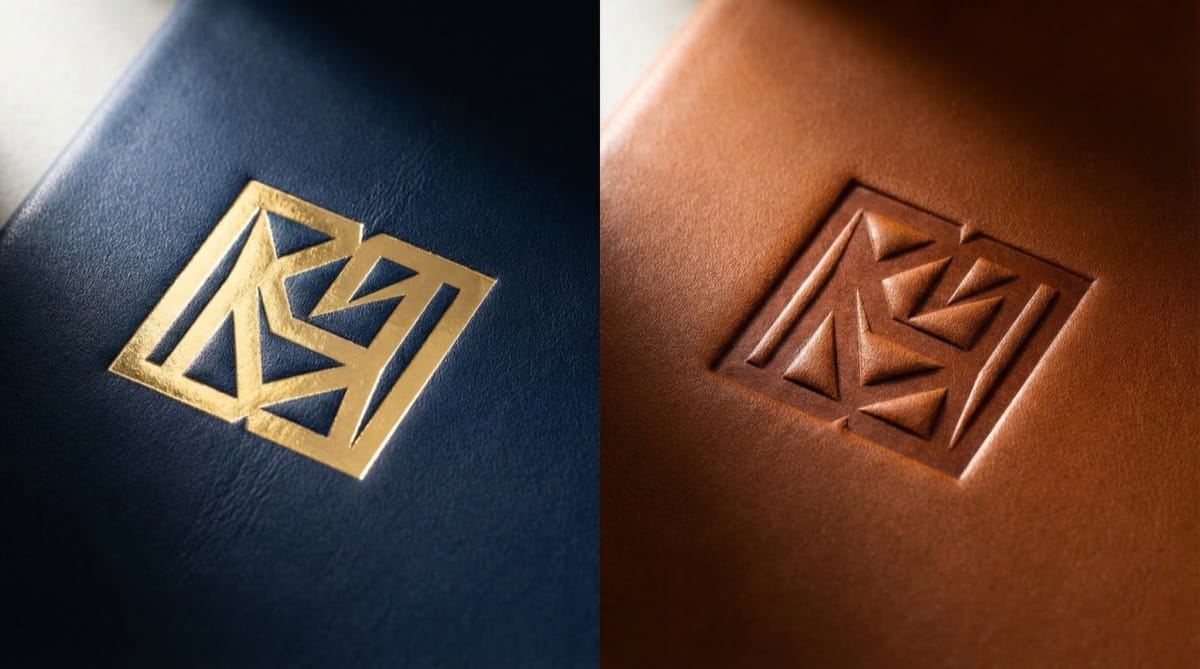
A raised impression of your logo created by pressing a heated die into the material — without ink or foil.
Best for: Understated luxury. The logo is visible through light and shadow, creating a subtle, tactile brand mark.
Works on: Leather, leatherette, paper, cardboard
Pros: Elegant minimalism, no color to fade, timeless look
Tip: Blind embossing works best with simple, bold logo designs. Fine details can get lost without color contrast.
2. Debossing
The opposite of embossing — your logo is pressed into the material, creating a recessed impression.
Best for: A clean, modern aesthetic. Debossing pairs beautifully with genuine leather where the impression reveals the material's natural color variation.
Works on: Leather, leatherette, paper, cardboard, some fabrics
Pros: Durable (won't wear off), tactile interest, works with or without color fill
3. Hot Foil Stamping
A heated die transfers metallic or colored foil onto the packaging surface, creating a vivid, reflective logo.
Best for: Maximum visual impact. Gold and silver foil stamping is the most popular choice for luxury jewelry packaging.
Works on: Paper, cardboard, leather, leatherette, some fabrics
Available foils: Gold, silver, rose gold, copper, matte gold, holographic, and custom Pantone metallic colors
Pros: Eye-catching, luxurious, wide color range
Tip: Foil stamping can be combined with embossing (foil + raised) for an even more premium effect.
4. Screen Printing
Ink is pushed through a fine mesh screen onto the material, creating a flat printed logo.
Best for: Detailed logos with multiple colors, or when you need exact color matching.
Works on: Fabric, paper, some leathers
Pros: Full-color capability, precise Pantone matching, good for complex designs
Considerations: Not as tactile as embossing/debossing. Works best on flat surfaces.
5. Embroidery
Your logo is stitched directly into fabric using colored thread.
Best for: Fabric and leather pouches where a handcrafted, artisanal quality is desired.
Works on: Cotton, linen, canvas, felt, some leathers
Pros: Dimensional, durable, handcrafted feel, premium texture
Tip: Embroidery adds a textural richness that flat printing can't match. It's particularly effective for drawstring pouches.
6. Laser Engraving
A laser burns your logo into the material surface, creating a permanent mark with precise detail.
Best for: Hard materials and when absolute precision is required for fine details.
Works on: Wood, metal closures, some rigid materials
Pros: Extremely precise, permanent, can achieve very fine detail
Choosing the Right Technique
| Your Priority | Recommended Technique |
|---|---|
| Subtle elegance | Blind embossing or debossing |
| Maximum visual impact | Gold/silver foil stamping |
| Handcrafted quality | Embroidery |
| Complex/multi-color logo | Screen printing |
| Combined luxury + visibility | Foil stamp + embossing |
| Fine detail precision | Laser engraving |
Logo Placement Options
Beyond the technique, placement matters:
- Centered on lid — classic, balanced, most common for jewelry boxes
- Bottom corner — subtle, modern, confident
- Interior lid — revealed during unboxing, creates a "moment"
- All-over pattern — your logo or monogram repeated across the surface
- Closure/clasp — engraved or stamped on metal hardware
Preparing Your Logo for Packaging
For the best results, provide:
- Vector file (AI, EPS, or SVG) — essential for die-making
- Pantone color reference — for foil or ink color matching
- Minimum size specification — some techniques have minimum size requirements
- Placement preference — where on the packaging you want it
Don't have a vector file? We can work with a high-resolution PNG or PDF and redraw it for production.
See It for Yourself
The best way to evaluate logo techniques is to see and feel samples. We can produce sample packaging with your logo in multiple techniques so you can compare side by side.
The material you choose affects which techniques work best — read our genuine leather vs. leatherette comparison to understand how material choice impacts logo application.
When you're ready to move forward, our complete ordering guide walks you through MOQs, timelines, and what to expect.