Why Packaging Matters More Than You Think
For jewelry brands, packaging isn't an afterthought — it's the first physical interaction your customer has with your brand. Before they see the ring, the necklace, or the bracelet, they see the box. They feel the material. They experience the unboxing.
In a market where perceived value drives purchasing decisions, your packaging communicates everything: your attention to detail, your commitment to quality, and your brand's position in the market.
The Three Pillars of Premium Jewelry Packaging
1. Material Quality
The material you choose sets the tone for the entire experience. Here's how the most common options compare:
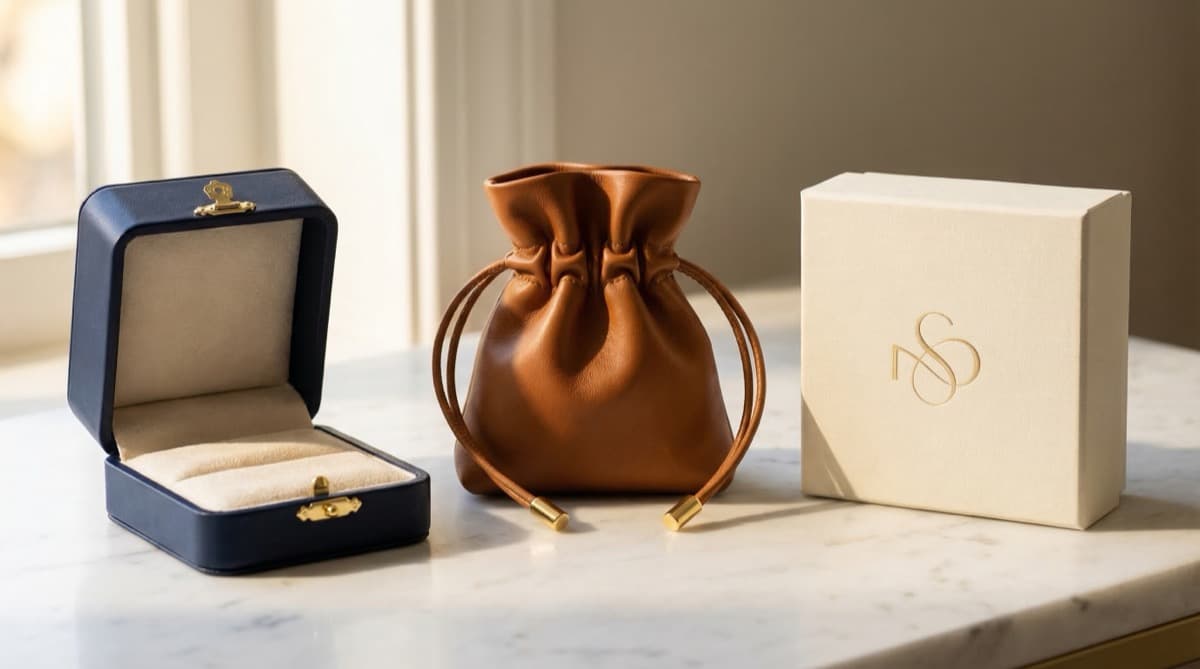
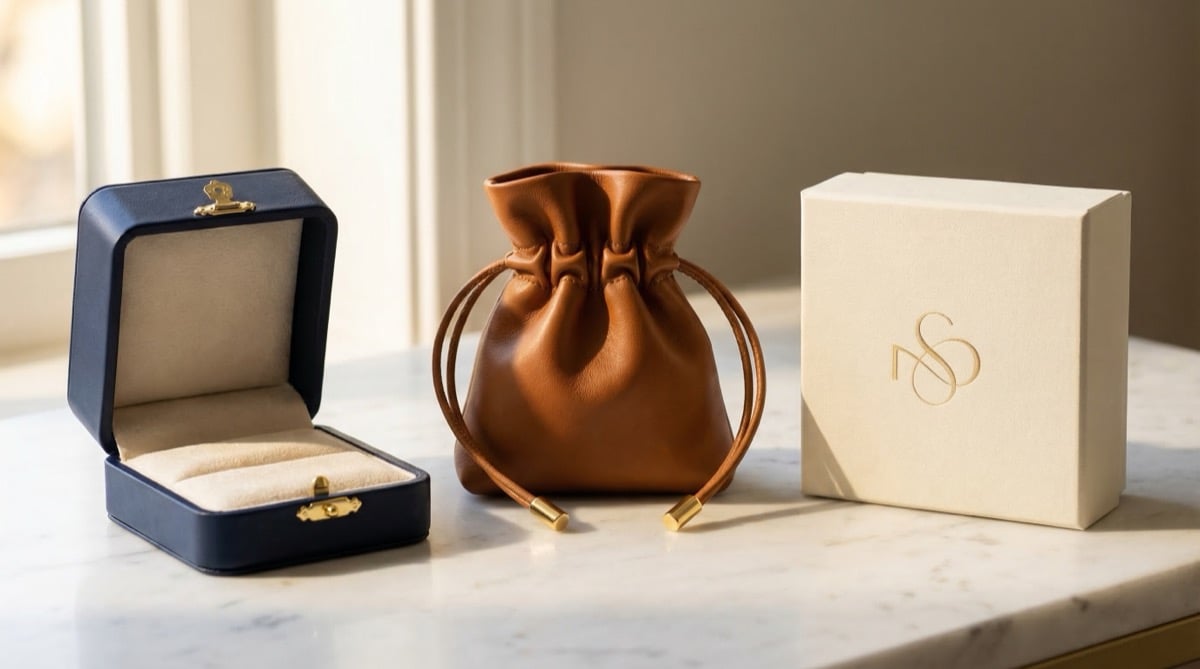
Genuine Leather — The gold standard for luxury positioning. Full-grain leather develops a patina over time, making each piece unique. It signals that your brand invests in quality at every level. Best for high-end collections and signature pieces.
Premium Velvet — Soft, rich, and unmistakably luxurious. Velvet works beautifully for box interiors and as an exterior covering. It's particularly effective for engagement rings and special occasion jewelry.
Leatherette (PU Leather) — A practical alternative that offers a leather-like appearance at a lower price point. Modern leatherette can be remarkably convincing, but discerning customers will notice the difference. Read our detailed genuine leather vs. leatherette comparison to help decide.
Premium Paper & Board — Don't underestimate paper. High-quality art paper with the right finish (soft-touch lamination, for example) can feel incredibly premium. It's also the most customizable option for printing.
2. Construction & Design
The structure of your packaging affects both the unboxing experience and the practical protection of the jewelry inside.
Rigid boxes with magnetic closures create a satisfying "reveal" moment. The weight and solidity signal quality before the box is even opened.
Hinged boxes (like classic ring boxes) offer a traditional, ceremonial feel that's perfect for engagement and wedding jewelry.
Pouches provide a softer, more intimate presentation. Leather pouches work particularly well for everyday jewelry and travel-friendly packaging.
Drawer-style boxes add an element of discovery — the act of sliding open the drawer builds anticipation.
3. Branding & Personalization
Your packaging should be unmistakably yours. The most impactful branding techniques include:
- Blind embossing — a subtle, elegant logo impression without color. Perfect for understated luxury.
- Hot foil stamping — gold, silver, or colored foil for a striking visual impact.
- Debossing — a recessed impression that adds tactile interest.
- Embroidery — ideal for fabric and leather pouches, adding a handcrafted quality.
Learn more about all available logo options, or read our in-depth guide to custom logo techniques.
Matching Packaging to Your Brand Position
Emerging Brands (Building Recognition)
Focus on creating a consistent, memorable unboxing experience. Choose one signature packaging style and own it. A well-designed custom box with your logo embossed in gold foil can position a new brand alongside established names.
Mid-Market Brands (Scaling Up)
This is where packaging variety matters. You might need different packaging for different product lines — pouches for everyday pieces, rigid boxes for premium collections. Consistency in material quality and branding across all packaging is key.
Luxury Brands (Premium Positioning)
Every detail matters. Genuine leather, custom Pantone-matched colors, and flawless finishing are non-negotiable. The packaging itself becomes a keepsake — something customers keep and display, extending your brand presence in their homes.
Practical Considerations
Minimum Order Quantities
Custom packaging typically requires a minimum order of 300-500 units per design. This ensures manufacturing efficiency and consistent quality. For most jewelry brands ordering quarterly or seasonally, this aligns well with production cycles.
Timeline
Allow 4-8 weeks from approved sample to delivery, depending on complexity. Factor in 2-3 weeks for sampling and approval before production begins.
Budget Allocation
A common guideline: allocate 5-15% of your product's retail price to packaging. A $500 necklace deserves $25-75 in packaging investment. This is where many brands underinvest — and where the right packaging partner makes the difference.
Next Steps
Choosing the right packaging is a strategic decision that affects your brand perception, customer experience, and ultimately, your bottom line. The best approach is to start with a conversation.
For a step-by-step walkthrough of the ordering process — including MOQs, timelines, and what to expect — read our complete guide to ordering custom jewelry boxes.
Get a custom quote tailored to your brand, or learn about our process to see how we work with jewelry brands to create their perfect packaging.