Why Packaging Matters More for Small Brands
When you are a small jewelry brand, every customer interaction carries outsized weight. You do not have decades of brand recognition to rely on — so the first physical impression your packaging makes is often the deciding factor in whether a customer comes back.
Your packaging is your brand story before the jewelry is even visible. It communicates quality, attention to detail, and how seriously you take your craft. For emerging brands, packaging is not overhead — it is your most cost-effective marketing channel.
Consider the numbers: research shows that over 70% of consumers say packaging influences their purchasing decisions, and roughly 40% share attractive packaging on social media. For a small brand, every unboxing that gets shared on Instagram is free advertising — and that unboxing experience starts with the packaging.
Premium packaging helps small brands punch above their weight. When your $200 necklace arrives in a beautifully crafted box with an embossed logo, it sits alongside — not below — established competitors in your customer's mind.
Understanding MOQs
What MOQ Means and Why It Exists
MOQ stands for Minimum Order Quantity — the smallest number of units a supplier will produce per design. For custom jewelry packaging, typical MOQs range from 100–500 units for stock customization and 300–1,000 for fully custom designs.
Suppliers set MOQs because custom packaging involves setup costs: dies for embossing, molds for box construction, plates for foil stamping. These fixed costs need to be spread across enough units to make production economical and keep per-unit pricing reasonable.
Low MOQ Does Not Mean Low Quality
A common misconception among emerging brands: ordering smaller quantities means accepting lower quality. This is not true. MOQ affects your per-unit price, not the materials or craftsmanship. A 300-unit order of custom jewelry boxes uses the same genuine leather, the same Pantone-matched velvet lining, and the same foil stamping as a 5,000-unit order.
The key is to be strategic about your first order. Start with one hero design — your signature box for your best-selling product line — and concentrate your volume there. This gives you the best per-unit price while establishing a packaging identity you can build on.
For a complete walkthrough of how ordering works — including timelines, sampling, and what to expect — see our guide to ordering custom jewelry boxes.
Choosing the Right Packaging Type
Before diving into specifics, our broader guide to choosing premium packaging covers the fundamentals of material selection, construction, and branding. Here, we focus on what matters most for small brands.
Rigid Jewelry Boxes
Best for rings, earrings, pendants, and watches. Styles include magnetic closure, hinged lid, drawer-style, and lid-and-base construction.
Small brands love rigid boxes because they create an immediate perception of luxury. The weight in the customer's hand, the satisfying click of a magnetic closure — these details signal quality before the box is even opened. For most emerging brands, a magnetic closure box offers the best balance of premium feel and cost efficiency.
Jewelry Pouches
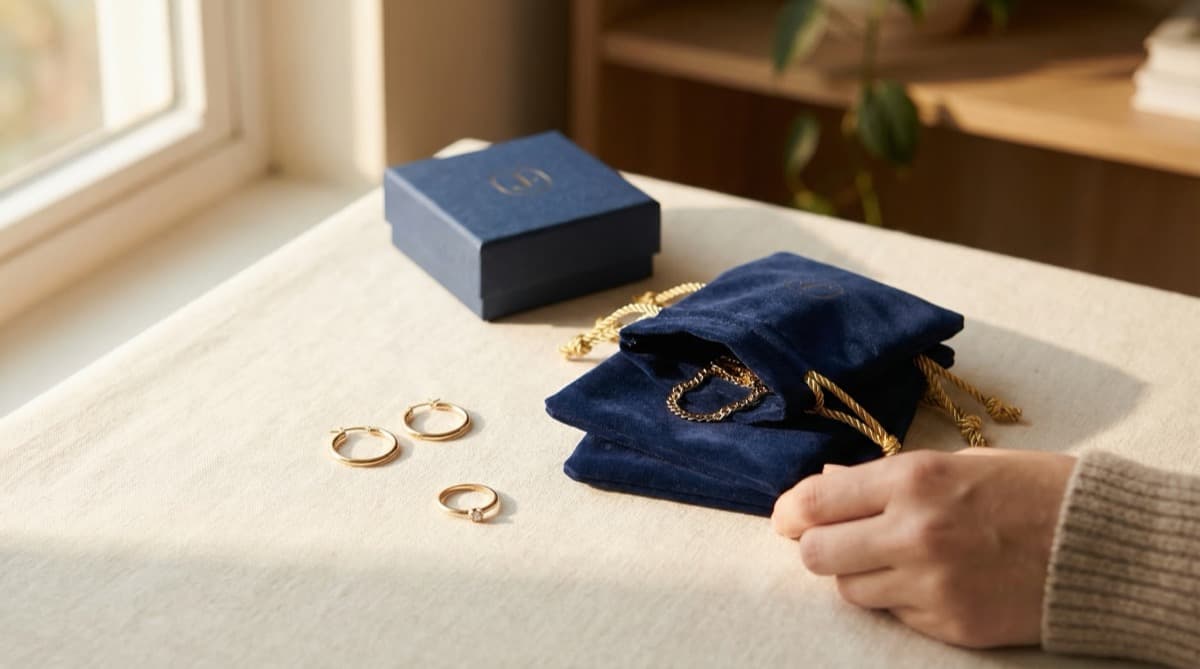
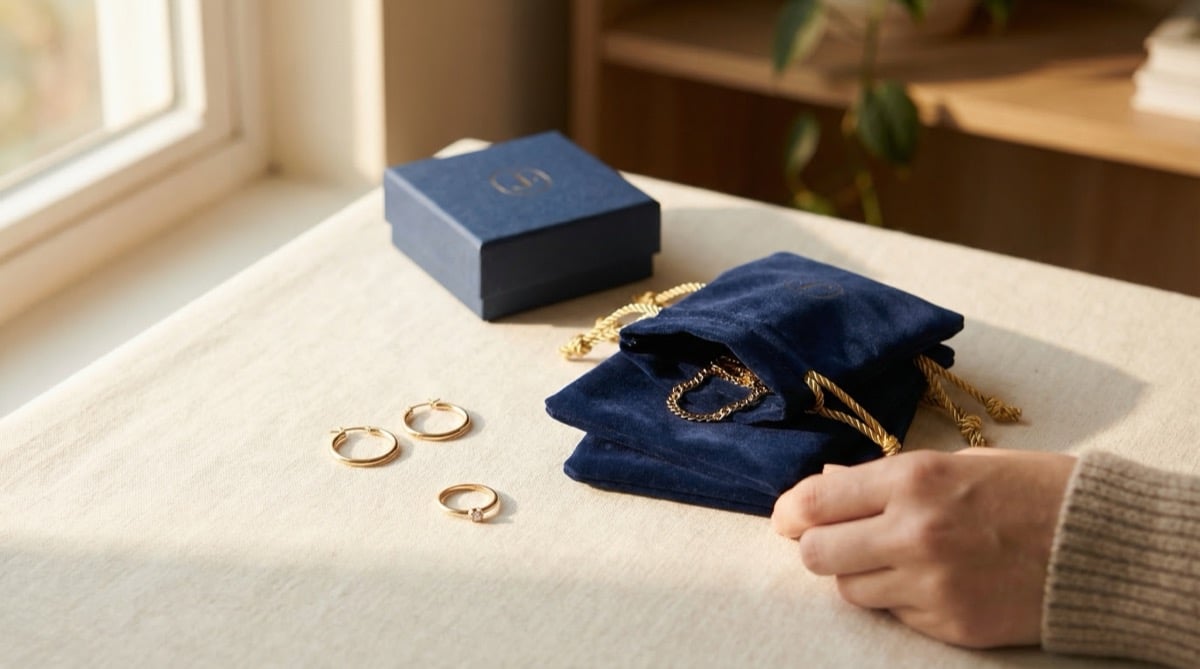
Best for bracelets, chains, lightweight pieces, and travel-friendly presentation. Materials include genuine leather, velvet, suede, and microfiber.
Leather and fabric pouches generally cost less per unit than rigid boxes, making them a smart entry point for brands watching their budget. They also work beautifully as secondary packaging — a branded pouch tucked inside a box adds a layer of experience without a significant cost increase.
Branded Shopping Bags
Best for retail, pop-up events, trade shows, and wholesale deliveries. Branded bags in kraft paper, coated paper, or fabric extend the brand experience beyond the product itself.
Small brands often overlook shopping bags, but when a customer walks out of a trunk show or pop-up carrying a beautifully branded bag, that is walking advertising.
Matching Packaging to Your Sales Channel
Where you sell should influence which packaging you prioritize:
- E-commerce: Prioritize shipping durability and unboxing drama. A rigid box with a snug insert protects the piece and creates a moment when the customer opens it at home.
- Retail and boutiques: Choose stackable, display-friendly packaging that works on a shelf and in a window.
- Pop-ups and trunk shows: Portable, eye-catching bags and pouches that customers can carry comfortably.
Smart Budgeting for Premium Packaging
The 2–5% Rule
A practical guideline: allocate 2–5% of your product's retail price to packaging. That means a $200 necklace justifies $4–$10 per package — enough for a fully custom rigid box with your logo in gold foil.
Reframe packaging as marketing spend, not overhead. The cost of a beautifully branded box is a fraction of what you would pay for digital advertising — and the impression lasts far longer.
Where to Invest vs. Where to Save
Invest in:
- Logo application — embossing or foil stamping creates a lasting brand impression that customers remember
- Interior finish — velvet or suede lining elevates the entire experience
- Material quality for your hero product — the box your best-seller arrives in defines your brand
Save on:
- Excessive box sizes — right-size every SKU to avoid wasting material and increasing shipping costs
- Multi-color printing — a single-color gold foil stamp is often more elegant and more affordable than four-color process
- Secondary packaging for lower-tier products — a well-branded pouch can work beautifully on its own
Cost-Per-Impression Thinking
Compare packaging cost to digital ad cost per impression. A $3 custom box gets seen by the buyer, anyone present during gifting, and potentially thousands if it appears on social media. That is a cost per impression that no paid ad can match — and the emotional impact is incomparably stronger.
How to Scale Your Packaging as You Grow
Start Focused, Then Expand
Phase 1 — Launch: One hero box design and one pouch style. Keep it simple, invest in quality over variety. Your goal is to establish a packaging identity, not fill a catalog.
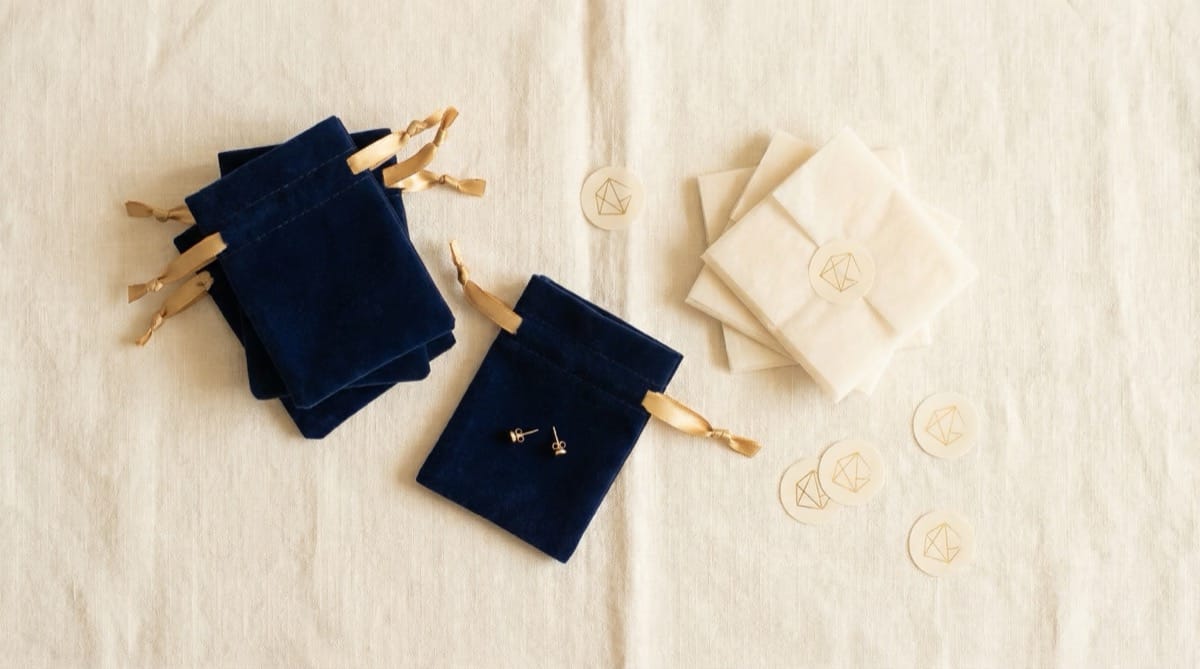
Phase 2 — Traction: Add a second box size or a shopping bag. Introduce seasonal touches — a different ribbon color for holiday orders, branded tissue paper, a handwritten-style thank-you card.
Phase 3 — Growth: Build a full packaging suite — boxes, pouches, bags, tissue, and cards. Consider tiered packaging for different product lines (premium rigid boxes for your signature collection, elegant pouches for everyday pieces).
Reorder Strategy
Reordering the same design costs less because tooling and setup fees are already paid. Increasing your order quantity on reorders lowers the per-unit price further. Plan reorders 4–6 weeks ahead to avoid rush fees and give yourself time for any design adjustments.
Packaging Partner vs. Vendor
A true packaging partner helps you plan for growth, suggests cost-saving adjustments as your volume increases, and keeps your brand consistent across every SKU. Red flags of a vendor-only relationship: no design support, rigid MOQs with zero flexibility, no sample process, and no interest in understanding your brand.
5 Common Packaging Mistakes Small Brands Make
-
Oversizing boxes — wasted material, higher shipping costs, and the jewelry looks lost inside. Always size your box to fit the piece with just enough cushioning.
-
Choosing the cheapest option — generic white boxes undermine premium pricing. If your earrings retail for $150, they should not arrive in a box that looks like it cost a dollar.
-
Inconsistent branding — mismatched colors, fonts, or finishes across your packaging types confuse your brand identity. Your box, pouch, and bag should feel like they belong to the same family.
-
Skipping the sample process — always approve a physical sample before committing to a full order. Digital mockups do not capture the feel of materials or the precision of a logo impression.
-
Waiting too long to invest — brands that upgrade their packaging early see faster growth in repeat purchases and referrals. Your packaging does not need to be perfect on day one, but it should be intentionally designed.
Getting Started
You do not need to have every detail figured out before reaching out. A good packaging partner will guide you from an initial concept to a finished product — that is what the design and production process is for.
Here is a simple starting point:
- Brief your vision — what does your brand look and feel like? What materials appeal to you?
- Request samples — see and touch physical options before committing
- Approve and order — refine the sample, confirm quantities, and move to production
Whether you are launching your first collection or upgrading from generic packaging, the goal is the same: packaging that matches your brand's ambition and makes every customer feel like they are receiving something special.
Tell us about your brand and we will suggest the right packaging to match your vision and budget.